
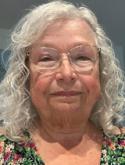
When I joined Lincoln Land Community College’s Academy of Lifelong Learning (ALL) it was to play in the golf league. I hadn’t played golf in over 30 years but always enjoyed the game. I was, of course, terrible, but the members were very patient with my lack of ability and gave helpful hints that I continue to use today. After four years, my game has improved considerably. I’m still not ready for the LPGA, but I did receive a dozen golf balls a few years ago for being most improved.
Immediately after joining, I attended a New Member Orientation where I learned of the multitude of activities offered by the organization. I have always wanted to learn to play pinochle, and ALL offered a class. I wanted to learn to play Mah Jongg, and a beginner class was available. It turns out, pinochle was not for me. I won a prize for the lowest score, but I still play Mah Jongg every week.
As I reviewed the monthly update, I was intrigued by an offering labeled Chautauqua. I was unfamiliar with the term; but the topic and speaker were interesting, so I decided to attend. I don’t recall which program was the first I attended, but I continued to mark my calendar to attend each month. Shortly thereafter, one of the sessions happened to actually be on Chautauqua where the concept and history were explained.
Chautauqua originated as an outdoor educational and cultural conference featuring public lectures, concerts and dramatic performances. It began in 1874 as a summer school for Sunday school teachers at Chautauqua Lake, New York. It evolved into a traveling adult education program that toured America in the early 1900s bringing entertainment to rural communities. With the invention of the radio and the television, the traveling programs died out. Programs are still held every year during summer at Chautauqua Lake, New York, based on the four pillars of the movement: arts, education, religion and recreation.
The ALL Chautauqua committee consisting of ALL members utilizes those pillars to develop a theme. Topics are selected in three-month increments with a specific subject matter for the quarter, bringing in local speakers, educators, political leaders and business professionals.
Our most recent series was on “Ethics” covering ethics in education, religion and artificial intelligence in April. We had ALL member Dr. Paul Boatman, professor emeritus of pastoral care and counseling at Lincoln Christian College, give an outstanding talk about ethics in religion; Mike McGrath, with a master’s degree in education administration and also an ALL member, discussed ethics effecting secondary and elementary education; and UIS Professor Roxanne Kurtz Smith spoke about morality and ethics as they relate to artificial intelligence. “Business and Government Ethics” was the topic for May with a panel moderated by Beverly Bunch, former professor of public administration and policy at UIS. The panel consisted of Michael Murphy, president of the Greater Springfield Chamber of Commerce, and Andy Goleman, Sangamon County auditor. The ethics series ended with “Medical Ethics” in June led by Leslie Catalano, Ph.D., nursing professor at LLCC.
Prior to our most recent series, we embraced ALL President Joan McGrath’s interest in expanding member knowledge in different cultures by exploring Japan. We learned of Japan’s rise as a feudal power and of their ancient culture via a lecture by Pete Shapinsky, UIS associate professor. Yosh Golden spoke to the group about Japanese American interment during WWII in February, and former Springfield City Mayor Karen Hasara addressed the group about Springfield’s sister city, Ashikaga, Japan.
In spring of 2025, the series was on baseball, and we attended a Springfield Lucky Horseshoes game, learned of the Springfield, Illinois, women’s baseball league and were educated on central Illinois contributions to Negro Leagues baseball by author Robert Sampson. Chautauqua through ALL has explored genealogy with a new Ancestors Search program developed from continued member interest in that area. Race relations, with local leaders facilitating the discussion, has also been a well-received theme. The committee is excited for our fall series starting in September, which will include women leaders of the Springfield area.
Chautauqua is an important part of the learning aspect in the title of our organization. Keeping the mind active and exploring new avenues of knowledge helps keep our members a vital part of the LLCC community. Chautauqua, History Hunters, our writing and storytelling group, Scribes, our Hooks and Needles group, and many other programs within the organization continue to challenge and advance my knowledge. Five dollars per month is a small price to pay for the opportunities available the LLCC’s Academy of Lifelong Learning.
If you are a person 50 or better and would like to learn more about ALL, please visit www.llcc.edu/all or contact the LLCC Community Education office at 217-786-2432 or Community.Education@llcc.edu.