
Surge Forward
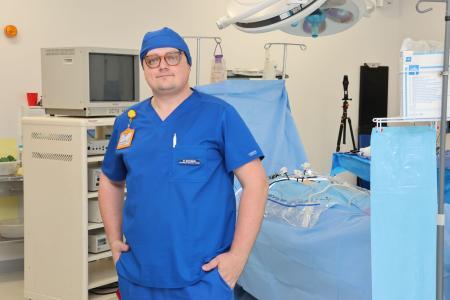
When Peyton Boysen of Virden envisioned his future in health care, he always saw himself in a hospital operating room — working hands-on, supporting patients and playing a critical role in lifesaving procedures. What he didn’t see himself becoming was a doctor or a nurse.
Now a first-year surgical technology student at Lincoln Land Community College, Boysen is turning that vision into a reality.
After earning his bachelor’s degree in physiology, Boysen found himself at a crossroads. While exploring his next step, he discovered LLCC’s Surgical Technology program, a path that aligned perfectly with his long-standing goal.
“Surgical technologists are usually the first one in and the last one out of the operating room,” he says. “You prep the room and make sure your sterile field is ready, prepare the drapes, get your tools ready, everything. Even down to damp dusting, which is scrubbing down the equipment at the beginning of the day and mopping the floor. It’s your job to make sure no one compromises that sterile field throughout each operation.”
Surgical Technology Program Director Nichole Smith says surgical technologists play a vital but often unrecognized role in patient care.
“Surgical technologists work behind the scenes to make sure you or your loved one’s surgery goes according to plan,” Smith says. “They’re the silent heroes supporting the surgeons and nurses, focusing on every detail in the operating room."
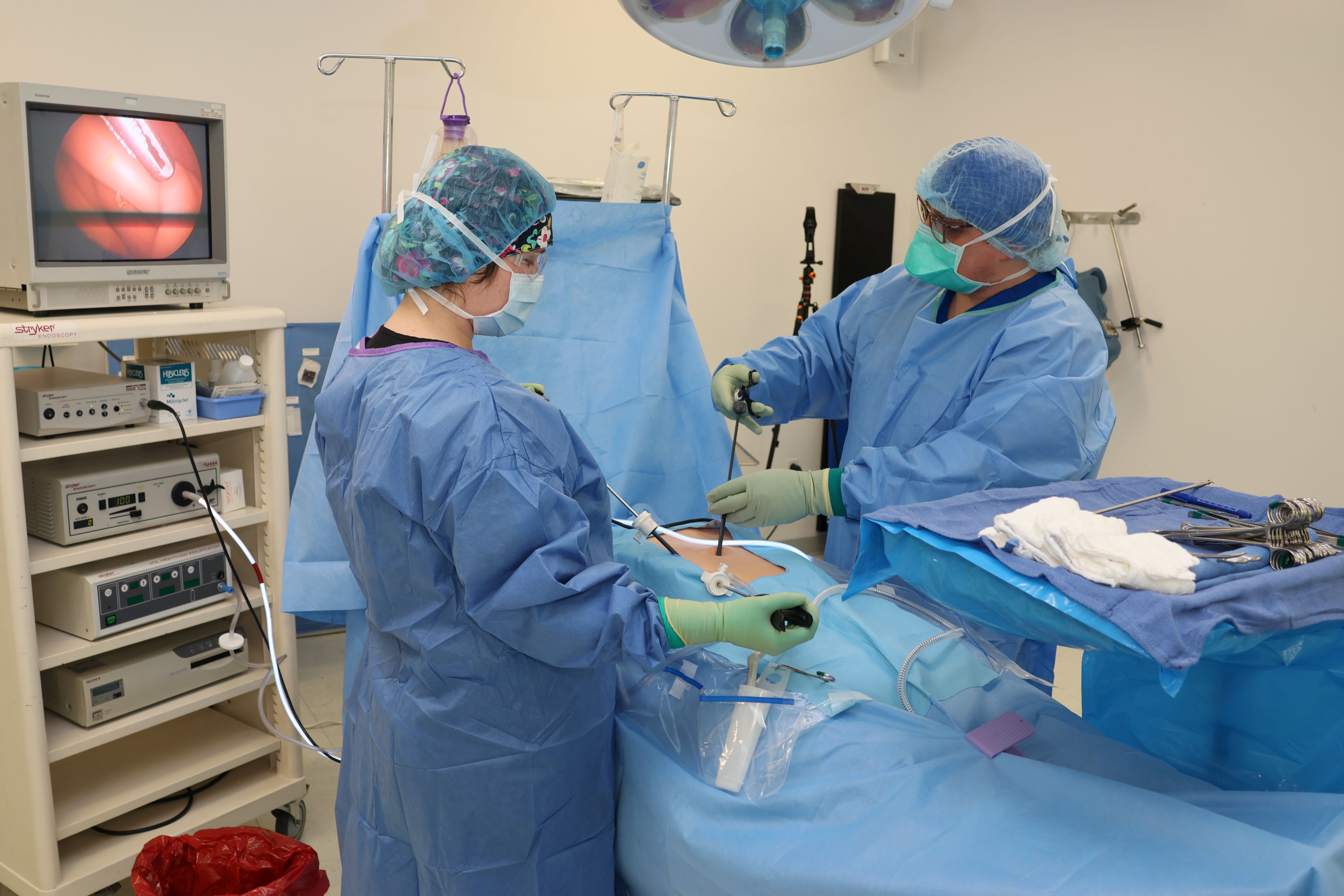
Despite the importance of their role, Smith notes that the profession isn’t widely understood. “People don’t always realize there’s someone in this role within the operating room,” she says.
LLCC’s two-year Associate in Applied Science Degree program begins in the classroom before moving into clinical settings. Because Boysen already holds a bachelor’s degree, he feels well-prepared and eager to begin clinical rotations next semester.
“My favorite thing is being hands-on with the equipment,” Boysen says. “I’ve been able to go in, job shadow and see some operations. I’m looking forward to getting in there and doing more of that.”
Clinical rotations place LLCC surgical technology students in a variety of settings, including clinics and rural hospitals to Level I Trauma Centers — offering broad, real-world experience.
The field also offers strong job security. According to the U.S. Bureau of Labor Statistics, employment of surgical technologists is projected to grow 5% over the next eight years, reflecting continued demand in health care.
Boysen’s connection to LLCC dates back even further. He earned college credit through LLCC Dual Credit courses while still in high school, making his return to community college a natural choice.
“LLCC gave me the readiness I needed to attend a university and now it’s helping me target my professional goals,” he says. “The PATH program through LLCC offers financial assistance to those wanting to work in health care, and I get to live at home while I complete this goal. The opportunities are wonderful.”